Wednesday

'War Games'


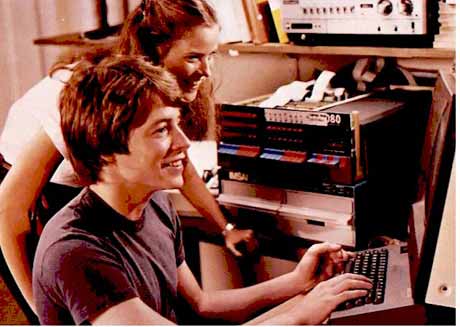
I caught John Badham's 'War Games' on Vision Tv tonight (religious tv... their choices are interesting). One of the things I like about watching 'old films' is the glimpse you get into the fashion, trends, psychology, thoughts and ideas of the times. Normally I wouldn't have considered the 1983 'War Games' as old but it is fascinating to see the obsessions of the day. Fear is rampant. Fear of technology, fear of the Soviets, fear of one's own military and fear of nuclear war (a fear we will visit again). It is interesting as it is near the end of the cold war but highlights American uncertainty.

'War Games' isn't alone as the early eighties saw the release of 'Red Dawn' (1984), 'The Terminator' (1984) and 'The Day After' (1983). James Cameron also explored his nuclear holocaust fears in 'Terminator 2' and 'The Abyss' (more in the directors cut). These films don't stand alone as they follow in the footsteps of Sidney Lumet's 1964 'Fail Safe' and Stanley Kubrick's 1964 satire 'Dr. Strangelove'. What's interesting here is that these films are twenty years apart and all in the third or fourth year of the decade. There doesn't seem to be much made about the topic in the 1970's. What's also interesting is Cameron's shift of fear in the 1994 'True Lies'...

As an aside, 'Ally Sheedy', the co-star in 'War Games' apparently became an obsession of some of the hacker community in the early eighties. If you are interested in phone phreaking or hacking you should check out Jonathan Littman's non fiction novels 'Fugitive Game: Online with Kevin Mitnick' and 'Watchman', a book about the famous hacker 'Kevin Poulsen'. Both books make for entertaining and fascinating reading. The subjects of the those books do make claim that Littman's truths are flawed and I can understand their point. However, if Littman unwittingly combines truth with fiction or legend, it doesn't detract from the sheer enjoyment you get from reading the books.

Tuesday

For you Superman fans...


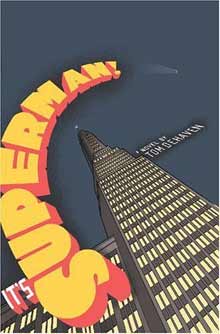
I was at the bookstore on the weekend and went over to the 'd' section to see if Tom De Haven had written anything new. Low and behold, he has gone and written a book on Superman! For those of you not familiar with De Haven's work he wrote a terrific trilogy that revolved around the evolution of the comics.

He started the series with 'Funny Papers' which takes place at the turn of the century. In this book a newspaper sketch artist hits it big time with the creation of the comic strip 'Pinfold and Fuzzy'. I still get a kick out of the bit where the ventriloquists dog hasn't said a word since the ventriloquists death...

The second book fast forwards to the nineteen thirties with 'Derby Dugan's Depression Funnies'. 'Pinfold and Fuzzy' have been transformed into Derby Dugan and the story revolves around the life of the comic's ghost writer. This book features one of the great curmudgeon characters of all time, Walter Geebus.

'Dugan Under Ground' is the third book and takes us to the modern day. Derby Dugan as it was known is no longer. However, it is being kept alive in subversive form by Roy Looby, a contemporary of the likes of Crumb.

One of De Haven's talents is the superior ability to conjure up the feeling and atmosphere of these time periods. He also seems to just roll along through the story, spending his time examining his characters. These books are not page turners, they settle in and move at a leisurely pace. Then, as it all starts to culminate to the finish, he hits you with some profound ideas and emotions.

The trade paperback of 'It's Superman' is out at the end of the month and I'll be picking it up for sure.

Monday

Film Sound


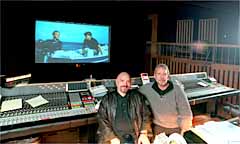
A few years ago I was asked to teach an introductory film course on sound. I am not somebody who enjoys teaching but what I do like about it is that you have to consolidate your own thinking and ideas in order to present them to students. I agreed to the course and what I discovered was that sound was an incredibly difficult course to teach. Of all the film disciplines it was often the hardest for the students to grasp. On a technical level students were often confused by all of the 'measuring' of sound. They had to learn to observe sound levels and often with everything that was going on during a shoot, it was the last thing that was on their mind. When it came to mixing they were often confused by all of the sliders and technical requirements of the equipment. Sound wasn't something you could see or grasp.

The other problem with sound was trying to describe how it affects people. Often when filmmakers make a film they use sound practically (ie sound effects) and then add music to fill in the emotion. This is where the topic becomes both difficult and interesting...

Walter Murch, the multi-talented film and sound editor once said that if the picture was the 'liminal' element of the film then the sound was the 'subliminal'. He felt that people watching a film are very critical of what they saw but would rarely tune into what they heard. The ears are not critical nor are they particularly discerning. The picture is obvious to the eye where the sound is a mixture of many sound elements all mixed together to help give the story feeling and drama.

This is where Murch has made part of his fame. Unafraid to experiment, he doesn't contain his sound ideas to what is practical or what is on the screen. He uses it to manipulate the audience. In the academy award winning 'The English Patient' Murch uses the sound to tell the story, to create transitions and memory. A sound echoes in the patients mind and transports us through the story. In 'Apocalypse Now' Murch creates both a war soundtrack, full of glory and violence and then folds the sound back to reveal a personal soundtrack, one of self doubt. In one of the most stark and famous examples Murch places the sound of a screeching train into the scene where Michael has to decide his fate in 'The Godfather'. This is the use of sound for emotion.

Another film I like to cite is 'Silence of the Lambs'. What struck me when I first saw the picture was the level of intensity of the film. It never lets up. The dread is thick and if you deconstruct the soundtrack of the film and it is easy to see why. The terrific score by Howard Shore is less about melody as it is about soundscape. The music serves the story. It is funny how unmemorable the film's music is as it is so deeply entrenched with the picture that you don't even notice it. Watch the scene where Jody Foster goes to see Lector for the first time. There are all sorts of sounds on the soundtrack that have no practical use. Nothing in the set seems to be making these noises. Instead, they are working on the 'subliminal' trying to unsettle the audience. As Foster walks down the hall towards Lector, Howard Shore is working on low level trying to keep that feeling of fear and dread. Ron Bochar, the sound designer describes it as this:

"Here's how Jonathan described Jodie Foster's first trip down to visit Lecter in the dungeon: "This is the bowels of the building. Let me hear howling and let me hear bowels.' So that's what you got. I can' t begin to list the material that went into all that. But there were animal screams and noises built into the ambience itself downstairs there. From a little movie I had made years ago called Little Monsters I took this lunatic kind of screaming that I had recorded; I took track, processed it, slowed it down, and played it in reverse. That became one of the ambiences in the room, too. It's the room tone, but the room tone has been made from some guy screaming in pain. Whenever you're down there with Lecter there's this element--it's a low tone that rises and then comes down again. It's very organic as opposed to something you can create electronically. I don't like taking sounds that start electronically; I like sounds that start organically. It' s a lot more fun."

In Ralph Rosenblum's autobiography "When the Shooting Stops..." he describes his experience editing Woody Allen's first film 'Take the Money and Run'. According to Rosenblum, he was hired to recut the picture as it was testing horribly and no one found it particularly funny. What Rosenblum discovered was that Allen had been working in the wrong 'tone' and that Allen was far to critical of himself and had removed many of his good jokes. In addition to reintroducing elements that had been cut and rearranging the film's sequences Rosenblum describes several instances when 'scenes could be salvaged by simply replacing the music'. In the orginal cut maudlin music was added in order to give the picture a 'chaplin' quality. A sense of drama. Rosenblum realized that it wasn't working and added music that would counterpoint the maudlin picture thus creating a very funny scene. He recognizes the soundtrack's ability to completely alter the tone and feel of a scene by simply changing the music. It's a powerful tool.

Sound and picture make for an exciting combination. There are many ways to accent the soundtrack whether it be musical or practical sound. It is an area that is often left unexplored as we are bombarded with the soundtrack instead of manipulated by it. It is also the element that is left for last. Everyone, often including the composer, is brought on as an after thought. They work to the finished picture and are not included enough in the development of it. It really is the least understood elements of filmmaking.

For a good primer and some great articles go to www.filmsound.org.
Friday

The Narrow Margin


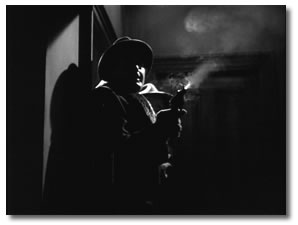
I watched 'The Narrow Margin' for the first time last night. It's a Noir thriller that involves a police officer having to transport a key witness in a mob trial across the country by train. It begins with two cops escorting the woman out of her house when they are attacked and the partner is killed. The protagonist of the film (played by Charles McGraw) doesn't like the witness (played by a sultry Marie Windsor) who is testifying against her husband. Mob hit men follow them to the train and we are stuck in a claustrophobic game of cat and mouse. It's the kind of film where no one is who they seem and McGraw is left trying to do the right thing as they bully him and attempt to bribe him.

This enjoyable film was shot in 1952 and would be considered on the latter end of the film noir period. The photography is exquisite and the staging is more involved than many of the low budget thrillers that proceeded it. The director Richard Fleischer constructs a lean thriller full of surprises and like other Noir films, the language of the film is stylized and hardboiled.

There are plenty of flaws in the picture that keeps it from being in the same class as Billy Wilder's 'Double Indemnity' (my favourite) or Lang's 'Scarlett Street' but there is a lot to like about it. It's an interesting film as it does have a different feeling than the 40's films. I suspect it has to do with the change of society and attitudes towards sexuality and violence. This becomes much more apparent in Orson Welle's 1958 thriller 'Touch of Evil'. In 'Touch of Evil' sexuality and decay are much more obvious. There is a definite change in tone with suggestions of drugs and rape. Like the previous discussion about the differences between 'No Way Out' and 'The Big Clock', there is a sense in 'The Narrow Margin' that film and society had started to shift. By the end of the decade (1959) Otto Preminger releases 'Anatomy of a Murder' and it really feels like Hollywood is starting to loosen it's hold on tough topics and things that were only hinted at previously are starting to be stated.

Wednesday

Pirates of the Caribbean


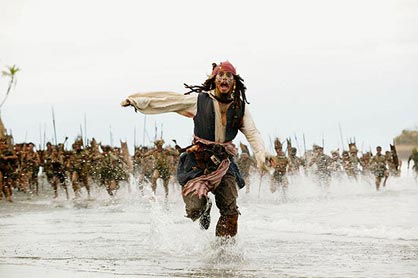
I just came back from 'Pirates of the Caribbean 2' and I must admit that I have mixed feelings about the film. Before I start I have to confess that I love a great high sea adventure especially a pirate adventure. The year that the original 'Pirates of the Caribbean' came out was a great year as it also saw the release of 'Master and Commander', the terrific Peter Weir film. If 'Master and Commander' was the entree, certainly 'Pirates of the Caribbean' was the dessert. The elegant but brutal 'Master and Commander' was contrasted nicely by the humourous and imaginative 'Pirates'.

Fast forward to this year and the Pirates are back - bigger and... well bigger. After a clumsy start trying to find it's tone again, Captain Sparrow and crew were off on their next adventure. There is a lot to like about the film with it's terrific visual effects, imaginative characters and playful script. Despite this I would have to say that the biggest flaw of the film was it's length. It was too long. I'm not sure if it's the director or writers at fault here although I'm sure it's a bit of both. Having said that, the director has final say and it felt to me that Verbinski spent too much time working on 'set pieces' as opposed to good and simple storytelling. I enjoy the choreography of these amazing action sequences but they do end up being technical exercises when they start to become the focus of the film. This is where the film strays; these action sequences are just that, sequences. At some point the director has to stand back and look at the flow of the story and begin to pare it down to make sure that the focus is on story and characters.

Pirate movies are fun and it feels like everyone involved are like kids in the candy store, they indulge every fantasy and try to pack in every drop of fun into the film. It just requires an editor. First the director as editor and then the editor as editor. I wonder what pressure there was on Verbinski when the production has spent unimaginable amounts of money on these 'set pieces'? I imagine it's very hard to drop millions of dollars onto the cutting room floor. Having said all this, I did like the film but I didn't love it. For my pirate loving tastes, it was a bit too much of a monster movie but I can't hold that against it - that's my taste. It is also shaping up as the second film in a trilogy. The only problem with this is that the first act (the first film) provides us with the characters but not with the story. It's all a bit of patchwork trying to tie in a film that existed on it's own. It's not terrible patchwork but it is a bit of patchwork nonetheless.

As a note: The films writers are Terry Rossio and Ted Elliot. This writing team is responsible for such films as 'Aladdin', 'Shrek' (1 & 2) as well as the original 'Pirates of the Caribbean'. They host a terrific site, Wordplay where they give advice to screenwriters and share their experiences. They even published their version of the 'Godzilla' script that wasn't fully used by the production.

Tuesday

Tigga & Togga

Just wanted to post a link to an episode of 'Tigga & Togga' which will be airing on TV Ontario in September. The concept of the show was to introduce preschoolers to music and musical ideas. We focused the show on creating a musical experience where the characters helped make the music using found items etc.

http://www.animationmagazine.net/wac/tigga_and_togga.html

You can also check out the interactive website.

www.tiggaandtogga.com

Enjoy

Annie Hall


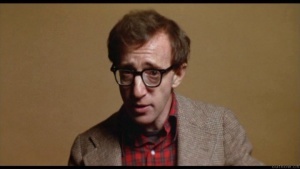
I screened "Annie Hall" again on the weekend. Sylvia hadn't seen it before so I jumped at the opportunity to watch it again. It's the kind of film that has grown on me with every viewing.

Woody Allen films tend to exist in a strange universe belonging to himself and his characters. The characters in his films are usually questionable in their behaviour and morals. In 'Hannah and Her Sisters' one sister has an affair with the other sisters husband. In 'Manhattan' Woody Allen's character is dating a teenager and takes up with the woman his best friends been having an affair with. In 'Crimes and Misdemeanors' one character pays to have his hysterical lover murdered. 'Crimes and Misdemeanors' is the most pointed of the previous examples in that it directly explores themes of religion and morality. By remaining in a sort of amoral universe Woody Allen allows himself to explore themes and ideas that other filmmakers rarely go to. Certainly mainstream Hollywood films tend to favour protagonists that are righteous and likeable. This is where Allen tends to split his audience. Some people give in to the fact that the characters are all 'flawed' while others need to connect with the characters and have trouble with the lack of morals and ethics. This is no more apparent than in 'Hannah and Her Sisters'. It's very hard to have empathy for someone who cheats on his wife with his wife's sister. And it's very hard to feel for a sister who cheats on her husband with the husband of her sister. At least it's very hard to feel for these people in a normal universe. In the worlds created by Allen these kinds of people can be met with some sympathy and understanding. But most of all, they exist so that we can look at the different facets of human nature and sexuality. Allen is the guide into areas that we don't need to go in our personal lives but can benefit from his insights and his humour. This is poignant escapism.

In terms of direction, Allen is distinct in American Cinema. There is never any doubt that you are watching a Woody Allen film. He uses terrific stage direction techniques and moulds them into cinematic techniques. Often he sets the camera up and allows his actors to flow though the spaces. 'Manhattan' is a terrific example of how he uses space as the camera is often a stationary voyeur. We become a fly on the wall in the drama. In Annie Hall he effortlessly plays with film form, creative editing and unconventional story techniques. He breaks out of conversations to address the audience directly. He cuts to flashbacks where he is present as both adult and child. He uses a split screen where the characters talk to one another through the split. Rarely do you see American films break time and space so freely. He hits the perfect tone and it doesn't ever feel contrived, or style for the sake of style. He pushes the boundaries even more a few years later with 'Stardust Memories' which seems to be heavily influenced by European filmmakers like Fellini. I stress the word 'influenced', not 'stolen'. Woody Allen is Woody Allen.

He has had a prolific career, that is for sure. There are only a few living filmmakers that come close to the amount of films Allen has made especially when you consider that he is writer and director and often the star. Some lament that his talents have waned over the past few years. Some question why he keeps going. I whole heartedly disagree with these detractors. Despite some misfires I respect his creative drive and can understand his desire to keep going. At some point he's not making films for us, he's making them for himself. And he should milk it as long as he can still get a budget.

******

I'd like to explore more 'time and space' ideas later but if you are interested in the technique you might check out Steven Soderbergh's 'The Limey' or Mike Nichol's 'The Graduate' for great examples. The dining room sequence in Citizen Kane is also a perfect example of breaking 'time'. Welles shoots an entire relationship from beginning to end in a single sitting at the dining room table! Brilliant.