Wednesday

Not with a bang but a whimper


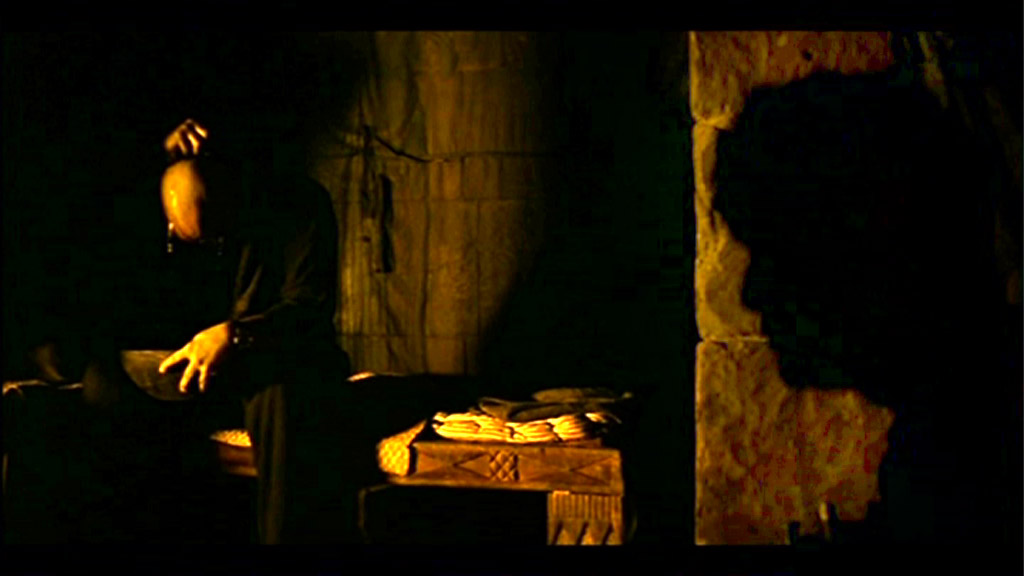
In my eternal effort to keep the film industry afloat, I picked up the new dvd of Francis Ford Coppola's 'Apocalypse Now'. I must confess to having bought this film a few times now and will admit that I am a sucker. As for the dvd, it's a gem and worth every penny. For me 'Apocalypse Now' is one of the greatest films ever made. It is rich in both theme and idea and it transcends cinema and comes closer to literature. And if I might confess again, I do think that literature transcends cinema most of the time.

Why then do I love the cinema?

The answer is easy, films like 'Apocalypse Now' are the reason I love the cinema. It represents the potential of what cinema can be. Film is much more of a poetic medium than it is literal. We combine images with sound and, often with a narrative structure, search for feeling and emotion. Film doesn't express complex ideas terribly well but it expresses emotions and feelings better than any other medium. I find that when a film becomes sublime is when it works on both an emotional level and an intellectual level. This is what makes Apocalypse Now so great - it's a film that walks the line between philosophy and emotion.

Having listened to Francis Coppola's commentary track (the reason for buying the umpteenth edition), I must admit that I'm inspired. What was so inspirational is the fact that Coppola says the film was a product of creative process. The film you see isn't the film he intended to make. While going on the journey to make the film he realized that his original ending was not appropriate. The film itself began to suggest it's own structure and style. It's fascinating as a writer when you start to write a story and no matter what you thought it should become, the piece starts to shape itself and dictate to you what direction it should take. This is the creative process. Despite our appetite to finish things, it is the process that makes the journey so interesting.

For Coppola, Apocalypse Now was a harrowing experience but the journey is what seems to have made this film so great. There was no cinematic manipulation or clever turn of story that could have saved him. He had to face the story that he began telling and let it lead him to it's own conclusion.

I truly admire Francis Coppola as a filmmaker and I think that any student of film can learn so much from his films and his DVD commentaries. He doesn't approach films in the same way as many other filmmakers. He doesn't rhyme off influences and superficial elements, he talks about the story and the process of creating the story. For Coppola, it's about the film and the ideas behind the film as opposed to the style. Style, as he says in the 'Apocalypse Now' commentary, was dictated by the story, it was something that came to him as opposed to him imposing it on the film. This is how filmmakers should approach storytelling - let the process dictate to you.

Tuesday

Wikipedia

There is an interesting article on Wikipedia on BBCNews today. If you don't know Wikipedia, it's one of those great things that have come out of the internet and the evolution of information. It's a free encyclopedia that allows users to publish articles and information on any topic.

The BBC article is about the proposed changes to the way that users can publish information on the site. Instead of allowing registered users to edit and publish articles, the site has proposed that each new article and user edits will have to be approved.

Wikipedia is such an interesting site and represents the democratization of information in the modern day. We are not limited to what elite scholars or publishers hold as truth or important. We are allowed to participate in the scholarship that has been inaccessible in the past. It is also what makes blogging a powerful and rich tool as it allows regular people to publish ideas and information, free from editors or publishers with social or political agendas.

Wikipedia doesn't come without it's share of problems and as pointed out in the article, is a target for pranksters and vulnerable to misinformation. The problem with a source like Wikipedia is that 'truth' may be distorted and must be used with a degree of caution. I don't find this to be an argument against this exercise in free information just as I will not watch the nightly news and believe the stories to be 'true'. All information even if it is from the hand of a respected scholar or journalist must be held up and examined. Every good historian knows that you must cross reference every piece of information you present as 'fact'. Wikipedia simply demands the same care and attention and requires it's readers not to take everything at face value. Like all scholarship, it is dynamic, changing all the time as new information comes to light.

I found it a bit amusing how some people reacted to the news that Pluto was being removed from the list of planets and reclassified as a 'dwarf planet'. Some people don't want change and changing the classification of Pluto seemed to challenge what they held as truth all their lives. For me it confirms the idea that the world is dynamic just as we are dynamic. I quote Emerson again:

"A foolish consistency is the hobgoblin of little minds, adored by little statesmen and philosophers and divines. With consistency a great soul has simply nothing to do. He may as well concern himself with his shadow on the wall. Speak what you think today in hard words, and tomorrow speak what tomorrow thinks in hard words again, though it contradict every thing you said today."

Friday

Missing DVD


The move from VHS to DVD has been a true blessing for movie fans. Every movie company has reached into their vaults and have released so many of their treasures. Topping it off is the quality of the prints - the new telecines of old prints have given us a chance to see films in such high quality.

I make a regular trip to amazon and look up some films that are missing. One missing film is Bernardo Bertolucci's spectacular 'The Conformist'. If you don't know it, the story is set in facist Italy where the protagonist, Marcello Clerici takes on an assignment with the secret police to murder a political dissident in France. 'The Confomist' is one of those rare films that blends a unique visual style with a depth of themes and ideas. Storaro's brilliant cinematography uses colour and contrast of shadow and light to lift up and support the stories themes. Clerici is a shell, a man of no courage or conviction, a true conformist. The characterization is quite profound and interesting and Bertolucci explores it through politics and sexuality. Anthony Minghella's 'The Talented Mr. Ripley' is another great film that explores similar themes and ideas. The theme was encapsulated in that great line 'I'd rather be a fake somebody, then a real nobody'.

I read on IMDB that Paramount no longer holds the rights to 'The Conformist' so the release is up in limbo. I believe that Orson Welles 'Chimes at Midnight' is in the same holding pattern. It's a shame as these great films should be able to find a new audience. Maybe the Criterion Collection will be able to broker a deal as they did with Orson Welles 'Mr. Arkadin' and 'F for Fake'. Criterion has done a wonderful job with both of those films.

Wednesday

Inspired Casting


Vince responded to my post about miscasting and proposed the opposite question of some examples of inspired casting.

Peter O'Toole came to mind as the star of David Lean's classic 'Lawrence of Arabia'. O'Toole was a relatively unknown at the time and one would think that it was a bit of a chance casting him in such a huge role.

Fred MacMurray was perfectly cast against type in Billy Wilder's 'Double Indemnity'. MacMurray played an insurance salesman who falls in love with a femme fatale and conspires to murder her husband and run off with her and the insurance money. MacMurray also appears in Wilder's 'The Apartment' and plays Jack Lemmon's boss, Sheldrake. Sheldrake uses Lemmon's apartment for romantic rendevous with his lover (not wife) played by Shirley MacLaine. Both roles play against the squeaky clean image that he later developed in 'My Three Sons' and Disney films like 'The Shaggy Dog'.

Casting is a funny thing as it's very hard to be able to imagine a finished film without its final cast. Imagine Tom Selleck as Indiana Jones (his audition is on the dvd). I'm sure 'Raiders of the Lost Ark' would have been just as entertaining but it certainly would have felt different. Imagine Harvey Keitel as Willard in 'Apocalypse Now', or 'Jaws' without Richard Dreyfuss. Apparently Francis Coppola had to fight for both Al Pacino and Marlon Brando for 'The Godfather', a move that seems like a no-brainer today.

Film is a collaborative medium and it is important to step back and look at how every decision you make can have a profound effect on the final picture. Choosing talent is that intangible element that can make or break a picture. This means the director, cinematographer, editor, costume designer, production designer, art director, writer etc... Each piece of the puzzle effects the final picture. There is enough ego in the industry that people want to believe in the theory of the 'Auteur' but I think you can't separate the director from the talent. A great director moulds the film but also knows to use the assets of talent.

Thursday

Fitzcarraldo


In the age where everything is possible using digital special effects it's pure magic watching a film like Fitzcarraldo. It's magic is that there are no special effects and what you are seeing is real, pure and simple.

If you don't know the film, it's story involves a failed entrepreneur (Klaus Kinski) who comes up with a brilliant idea on how to tap into an unused rubber tree forest. There are two rivers and only one is accessible, the other river has impassable rapids. Kinski's character, Fitzcarraldo, sees a point on the map where the two rivers are very close together so he schemes to take a boat to that point, drag the boat over the mountain and then be able to run a river boat above the dangerous rapids. He would take the untapped rubber trees up to the same point, take the trees over the mountain and down the safe river.

Exasperating his problems, the point at which the rivers meet is in the land of a tribe of natives known for headhunting. Fitzcarraldo ends up using the tribe for labour but isn't sure of the reasons behind their assistance. It is a great source of tension throughout the film.

Behind all of this ambition is Fitzcarraldo's love of the opera. His real dream is to make enough money to build an opera house deep in the Amazon.

The film is one of those great movies that, despite it being too long and meandering, transcends it's flaws. Part of this is from Herzog's insistence that he puts reality before the camera. No special effects allowed. Having seen it and knowing what you were seeing was real has a profound effect. Herzog even strips his style down where it often feels like a documentary. It doesn't take much imagination to see how difficult it would be to pull a river boat over a mountain and to top it all off, the river boat ends up running down the other river and through the rapids. This sequence was simply riveting as Herzog had cameras in the boat as it ran violently down the river.

It's easy to forget in the modern day just how exhilarating real images are. I think back to those huge films of the past where armies of people gathered to make a film. I think of Lawrence of Arabia where thousands of men clash in immense battle sequences. Or the Jungle exploding in Apocalypse Now and even the intimate scenes of the drunken Martin Sheen breaking down. Herzog is quite right in attempting to capture a large degree of reality as reality is powerful.

Fitzcarraldo's story is about dreams and one's own obsessions. It is a classic example of man vs man, man vs nature and most of all, man vs himself. How do we overcome our own obsessions? How do we accept our own failures and limitations? It's hard to know if Fitzcarraldo is mad at the beginning of the film or if he's going mad on the journey. He's an eccentric and maybe Herzog's point would be that we are mad for not chasing down our own dreams, for not allowing our own passions to consume us.

Monday

Miscasts

I was just thinking about the previous post and thought of Demme's remake of 'Charade' as 'The Truth about Charlie'. Mark Wahlberg was cast in the role that a mature Cary Grant had played in the previous film. Again, there was a maturity and worldliness about the character in the story that was missing from the youthful Wahlberg.

Anybody else have some examples of miscasting?

Red Dragon


I brought up 'Silence of the Lambs' in my post about the effects of sound on film. Tonight I caught 'Red Dragon', the prequel to 'Silence of the Lambs' and began to notice the difference between a great film and an 'ok' film. I think Jonathan Demme's 'Silence of the Lamb's' is a textbook example of filmmaking. Everything came together perfectly for the film - writing, casting, sound, cinematography, art direction, wardrobe and music, all under the superb direction of Jonathan Demme.

Red Dragon sees the return of the writer Ted Tally and actor Anthony Hopkins who played Hannibal Lector in 'Silence of the Lambs'. These two talents are not enough to elevate this picture to the original.

The first thing that stands out is the miscast of Edward Norton. Norton is a terrific actor but the lead role demanded an older and more experienced FBI agent and Norton looks younger than Jodi Foster did when she played the 'student' in the original. Sometimes you can get away with this reversal but it works against this film. They really needed to get a more mature actor to play the role.

The second thing is the films soundtrack. Where 'Silence of the Lambs' was textured and creepy, 'Red Dragon' is overstated and bombastic. That subtle tension that wouldn't let up in 'Silence of the Lambs' is replaced by a more obvious horror soundtrack that sacrifices the creepy for overwrought jolts.

Great films tend to have a great mixture of all elements - they are not made in a vacuum. Casting isn't something that is talked about much but it is something that can push a film into becoming a classic. The original 'Red Dragon' was made by Michael Mann as 'Manhunter'. Lector was played by Brian Cox and he did an admirable job but Hopkins brought the role to an entirely new level. Sure, 'Silence of the Lambs' had some hokey bits but overall the film is a masterpiece of macabre fiction.

For me, it goes to show you how important the crew is to the director and how important the director is to the crew. Demme benefits from a great crew and exquisite casting and the film benefits from his abilities to use those people.